
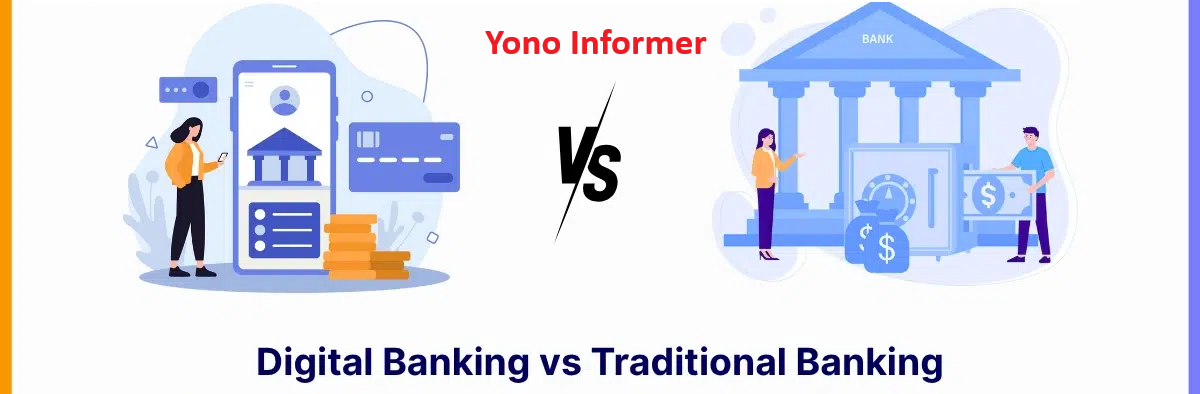
Digital Banking Vs Traditional Banking: Banking has changed dramatically over the past decade. With smartphones, AI-powered apps, and instant online transactions, digital banking is becoming the preferred choice for millions of customers worldwide. However, traditional banking still plays an important role for many people who value face-to-face services and physical branches.
In this article, we compare digital banking and traditional banking to help you decide which option is best for your financial needs in 2026.
Table of Contents
- What Is Digital Banking?
- What Is Traditional Banking?
- Digital Banking vs Traditional Banking
- Advantages of Digital Banking
- Advantages of Traditional Banking
- Security Concerns
- Which Banking Option Is Better in 2026?
- Our Team Final Thoughts
- FAQs
What Is Digital Banking?
Digital banking allows customers to perform banking activities online using mobile apps, websites, and internet banking platforms. You can transfer money, pay bills, apply for loans, check balances, and even invest without visiting a bank branch.
Key Features of Digital Banking
- 24/7 account access
- Instant fund transfers
- Mobile banking apps
- Online bill payments
- AI-based financial insights
- Paperless banking services
Popular examples include mobile banking apps, neobanks, and fintech platforms.
What Is Traditional Banking?
Traditional banking refers to physical bank branches where customers interact directly with bank employees for services like deposits, withdrawals, loans, and account support.
Key Features of Traditional Banking
- In-person customer support
- Physical branches and ATMs
- Personalized financial advice
- Cash deposit and withdrawal services
- Safe deposit lockers
Traditional banks are trusted for stability and long-term customer relationships.
Digital Banking vs Traditional Banking
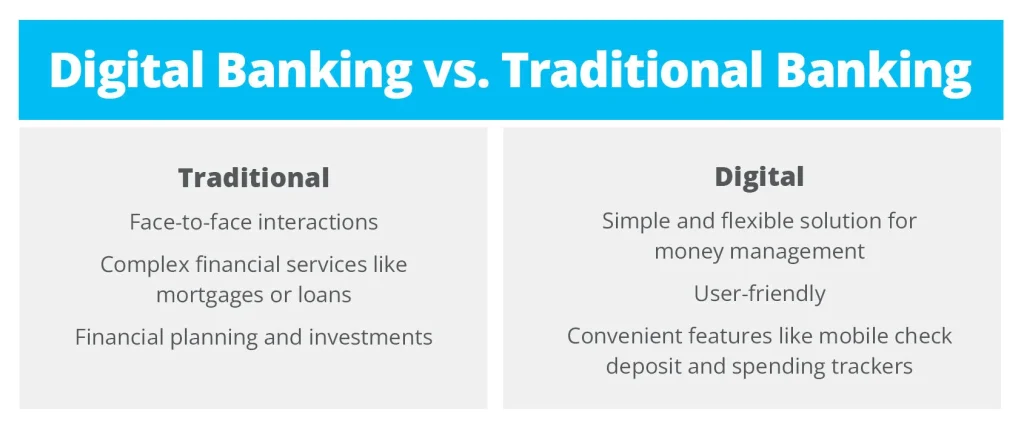
A detailed comparison between digital banking and traditional banking based on convenience, security, accessibility, and customer experience.
| Feature | Digital Banking | Traditional Banking |
| Convenience | High | Medium |
| Accessibility | 24/7 | Limited branch hours |
| Transaction Speed | Instant | Slower |
| Customer Support | Chatbots & online | Face-to-face |
| Fees | Usually lower | Higher |
| Security | Advanced cybersecurity | Physical + digital security |
Advantages of Digital Banking
1. Convenience
You can manage your finances anytime from anywhere using your smartphone.
2. Faster Transactions
Digital banking enables instant payments and fund transfers.
3. Lower Costs
Many digital banks charge lower fees due to reduced operational costs.
4. Smart Financial Tools
Budget tracking, spending analysis, and AI recommendations help users manage money efficiently.
Advantages of Traditional Banking
1. Human Interaction
Many customers still prefer speaking directly with bank representatives.
2. Better for Complex Services
Traditional banks are often better for mortgage advice, business loans, and investment planning.
3. Physical Cash Handling
Cash deposits and withdrawals are easier through branch networks.
Security Concerns
Both digital and traditional banking systems use strong security measures. However, online fraud and phishing attacks are increasing with digital banking growth.
Tips to Stay Safe
- Use strong passwords
- Enable two-factor authentication
- Avoid public Wi-Fi for banking
- Monitor account activity regularly
Which Banking Option Is Better in 2026?
The answer depends on your needs. If you value speed, convenience, and mobile access, digital banking is ideal. If you prefer personal interaction and branch services, traditional banking may suit you better.
Many customers now use a hybrid approach by combining digital banking apps with traditional bank accounts.
Our Team Final Thoughts : Digital Banking Vs Traditional Banking
Digital banking is rapidly transforming the financial industry, offering faster and smarter services. However, traditional banks continue to provide trust, personalized support, and physical infrastructure that many customers still rely on.
Choosing the right banking method depends on your lifestyle, financial goals, and comfort with technology.
FAQs
You can protect your account by using strong passwords, enabling two-factor authentication, avoiding suspicious links, and regularly monitoring your banking transactions for unusual activity.
Yes, many banks now offer fully online account opening through digital KYC verification, allowing users to open savings or current accounts without visiting a branch.
Traditional banking offers face-to-face customer support, access to physical branches and ATMs, personalized financial advice, and easier cash handling services.
Yes, digital banking is generally safe when banks use security features like encryption, two-factor authentication, and fraud monitoring. Customers should also use strong passwords and avoid sharing OTPs.
Mobile banking is done through a smartphone app, while internet banking is accessed through a bank’s website using a computer or mobile browser. Both allow users to manage accounts and perform transactions online.


